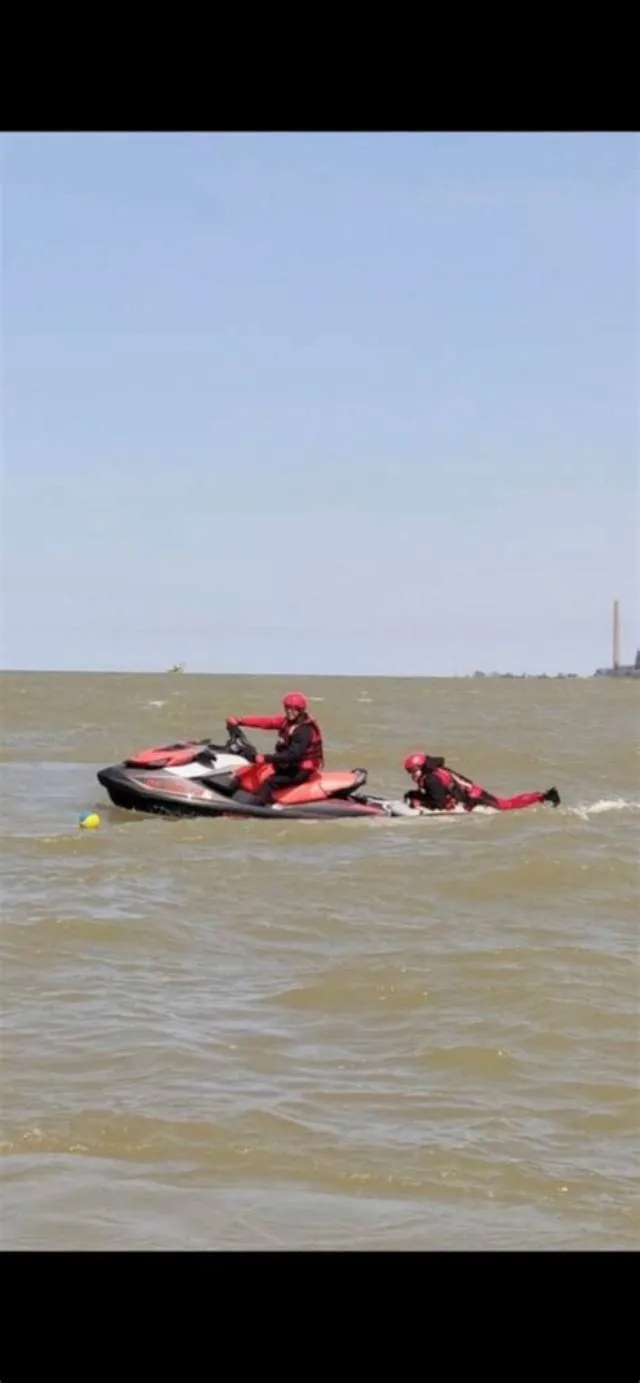
Watercraft Safety Program Manager at U.S. Geological Survey: Complete Career & Application Guide
Are you a dedicated occupational safety professional with specialized expertise in watercraft operations, aquatic risk management, and federal safety policy? The U.S. Geological Survey (USGS), a bureau under the Department of the Interior (DOI), has opened a high-impact vacancy for a Watercraft Safety Program Manager. This position, classified under the GS-0018 Safety and Occupational Health Management series, offers candidates an opportunity to lead national safety protocols, train scientific teams, and oversee watercraft programs across varied aquatic environments.
Whether you are an established GS-12 looking to advance your career to a GS-13 leadership role or an experienced civilian expert in marine safety, this guide provides a comprehensive breakdown of the duties, qualifications, application standards, and strategic tips needed to submit a winning application.
About the Agency: U.S. Geological Survey (USGS)
The U.S. Geological Survey (USGS) is the scientific foundation of the Department of the Interior. Serving as an unbiased science agency, the USGS focuses on monitoring, analyzing, and predicting Earth-system interactions to provide decision-makers with timely, actionable intelligence. USGS scientists conduct critical research on natural hazards, climate dynamics, water resources, ecosystems, and environmental health.
Because USGS scientific investigations frequently take place over rivers, lakes, estuaries, coastal environments, and open waters, ensuring the safety of personnel aboard watercraft is paramount. Operating within the Occupational Safety and Health Management Branch, the Watercraft Safety Program Manager ensures that every researcher, technician, and operator adheres to rigorous safety standards, specialized operating procedures, and regulatory requirements.
Key Role Responsibilities & Scope
As the primary technical authority for USGS aquatic safety nationwide, the Watercraft Safety Program Manager plays a pivotal role in protecting scientific personnel. Duty stations are negotiable across major USGS hubs—such as Seattle, Salt Lake City, Denver, Reston/DC, Austin, and Miami—following selection.
Core Duties Include:
Policy Development & National Standards:
Formulate, issue, and update national guidance, training curricula, and standard operating procedures (SOPs) for all watercraft activities across the bureau. This includes developing specialized protocols for unique or hazardous conditions, such as contaminated-water operations, epidemic/pandemic field protocols, and fast-water scientific sampling.Training & Certification Management:
Serve as an authoritative instructor for the Motorboat Operator Certification Course (MOCC) and advanced modules. Ensure training records are maintained bureau-wide while providing specialized technical guidance for high-risk operations (e.g., low visibility, tow operations, or transporting hazardous cargo).Inspection, Audit & Incident Investigation:
Plan and execute nationwide inspections and program reviews across USGS Science Centers. Lead high-level investigations into serious marine accidents or near-misses, determining root causes and mandating bureau-wide corrective actions. Oversee the Bureau Inspection and Abatement System (IAS) record for watercraft safety findings.Budgeting & Program Oversight:
Establish yearly program performance metrics, manage the national watercraft safety budget, and oversee lifecycle procurement for critical aquatic safety assets.Interagency Representation & Collaboration:
Represent the USGS on national working groups alongside the U.S. Coast Guard (USCG), state boating authorities, and external research partners to build cooperative agreements, resolve conflicting jurisdictional mandates, and align joint scientific safety standards.
Grade Level Comparison: GS-12 vs. GS-13
This position is advertised at two grade levels—GS-12 and GS-13—with a full performance level potential of GS-13. Review the table below to understand the differences in authority, scope, and qualification standards:
| Position Aspect | GS-12 Level | GS-13 Level (Full Performance) |
|---|---|---|
| Pay Range (Base Base/Locality dependent) | $89,508 - $116,359 approx. | $106,442 - $172,980 approx. |
| Level of Autonomy | Developmental; operates under broad policy guidance with supervisory support. | Fully independent; acts as national technical authority for complex/novel issues. |
| Policy Scope | Implements and evaluates bureau watercraft safety procedures and training. | Authors national SOPs, manages annual budgets, and leads bureau-wide investigations. |
| Interagency Role | Coordinates localized operational compliance with partner agencies. | Represents USGS on high-level DOI/USCG boards and negotiates formal agreements. |
| Specialized Experience Required | 1 year equivalent to GS-11 overseeing scientific watercraft compliance and training. | 1 year equivalent to GS-12 exercising authority over national safety program policy and audits. |
Key Eligibility & Candidate Requirements
To be considered qualified for this role, applicants must meet specific federal mandates and technical prerequisites:
- Citizenship: U.S. Citizenship or National status is required.
- Driver's License: Must hold and maintain a valid state driver's license.
- Physical Examination: Candidates must successfully pass a thorough medical physical assessment due to the physical demands of field inspections and hands-on aquatic instruction.
- Certifications: Ability to obtain and maintain Motorboat Operator Certification Course (MOCC) credentials.
- Government Credit Card: Must qualify for and maintain a official government travel and purchase card.
- Background Check: Appointment is contingent upon favorable adjudication of a Moderate Risk (MR) background investigation.
- Probationary Period: A mandatory 1-year probationary period applies to new appointees.
- Education: No education substitution is permitted for this series; eligibility is strictly based on specialized experience.
Compensation, Work Environment, and Locations
The full annual compensation scale for this vacancy spans $89,508 to $172,980 per year, depending on the targeted grade level and specific geographic locality adjustment.
Duty Station & Work Dynamics:
- Negotiable Locations: Duty station location will be finalized upon selection at an existing USGS office (e.g., Salt Lake City, UT; Seattle, WA; Phoenix, AZ; Los Angeles, CA; Denver, CO; Washington, DC; Miami, FL; Atlanta, GA; Chicago, IL; New York, NY; Portland, OR; Austin, TX; and others).
- Relocation Authorized: Travel and relocation expenses are not authorized.
- Telework: The position is eligible for telework with supervisory concurrence.
- Physical Demands: While policy and administrative duties are office-based or sedentary, field work involves climbing ladders on vessels, navigating uneven floating docks, deploying safety gear, working in extreme hot/cold temperatures, and conducting safety reviews on fast water.
Comprehensive Federal Benefits
As a federal employee with the USGS, you gain access to an exceptional, comprehensive benefits package designed to support your health, financial wellbeing, and work-life balance:
- Health & Wellness: Choose from dozens of medical plans under the Federal Employees Health Benefits (FEHB) program, complemented by dental and vision coverage (FEDVIP).
- Retirement Plan: A three-tiered retirement system including the Federal Employees Retirement System (FERS) pension, Social Security, and the Thrift Savings Plan (TSP) with up to 5% dollar-for-dollar agency matching.
- Paid Time Off: Earn 13 to 26 days of paid annual leave per year based on tenure, 13 paid sick days annually, and 11 official federal holidays.
- Insurance Options: Term life insurance through Federal Employees' Group Life Insurance (FEGLI).
Step-by-Step Application Guide
Applying for a federal vacancy requires strict adherence to instructions. Missing a single requirement can result in automated disqualification.
Step 1: Format Your Resume Strictly (The 2-Page Rule)
Your resume is the central tool used to evaluate your qualifications. It must not exceed 2 single-sided pages. Any submission longer than two pages will be immediately rejected without review. Furthermore, use standard margins (at least 0.5 inches) and a readable font size of 10 points or larger.
Step 2: Include Critical Resume Data
For every job listed on your resume, explicitly state:
- Exact start and end dates (Month/Day/Year or Month/Year).
- Average hours worked per week (e.g., "40 hours/week"). Failing to list hours worked will prevent proper crediting of specialized experience.
- Federal grade levels held (if applicable).
Step 3: Gather Supporting Documentation
- Federal Employees: Submit your most recent non-award SF-50 (Notification of Personnel Action) verifying career tenure and grade. Award SF-50s are invalid for this purpose.
- Performance Appraisals: Provide your official rating of record signed by a supervisor within the past 18 months.
- CTAP/ICTAP Applicants: Submit official proof of displacement or surplus status along with your latest SF-50.
Step 4: Submit Online
Log into USAJOBS, navigate to the job posting, click Apply Online, complete the USA Staffing assessment questionnaire, upload your formatted 2-page resume and supporting PDFs, and finalize your submission prior to 11:59 PM ET on November 2, 2026.
Expert Resume & Application Tips
- Align with Competencies: Ensure your bullet points demonstrate strong capabilities in Safety/Occupational Health Knowledge, Program/Project Management, Leadership, Customer Service, and Advisory functions.
- Avoid Copy-Pasting: While your resume should match the specialized experience statements conceptually, write your accomplishments in your own words with quantitative metrics (e.g., "Managed safety compliance for a fleet of 45 research vessels serving 200+ field scientists").
- Proofread Carefully: Vulgarity, exaggerations, or fraudulent claims will lead to instant disqualification and potential administrative action.
Frequently Asked Questions (FAQ)
Q1: Can I submit a 3-page resume if I have 20 years of military or private maritime experience?
No. The agency strictly enforces a 2-page limit for resumes under this vacancy announcement. Any content beyond page two will not be reviewed by HR staff.
Q2: Is remote work an option for this position?
Full remote work is not available. You must be assigned to an official USGS office duty station. However, telework options are supported subject to supervisor approval.
Q3: How will my specialized experience be calculated?
HR calculates experience based on full-time equivalency (40 hours per week). If you worked part-time, experience is credited proportionally. You must state your weekly hours on your resume for experience to be counted.
Q4: Are relocation costs covered if I am selected?
No. Travel, transportation, and relocation expenses are not authorized for this vacancy.
The Watercraft Safety Program Manager position at the U.S. Geological Survey represents an outstanding career opportunity for marine safety experts passionate about protecting scientific teams. By taking complete ownership of national policies, conducting hands-on safety training, and representing the agency in interagency maritime forums, you will directly safeguard the scientists delivering critical scientific intelligence for our planet.
Ensure your 2-page resume and supporting SF-50s are fully updated and tailored. Submit your complete package before the closing deadline on November 2, 2026, to step into a rewarded career with the Department of the Interior!
Why This Watercraft Safety Program Manager Job Matters
Champion aquatic research safety across the nation! Lead national watercraft policy and safeguard USGS field scientists with the U.S. Geological Survey.
Watercraft Safety Program Manager Job Overview
The U.S. Geological Survey (USGS) is seeking an experienced Watercraft Safety Program Manager (GS-12/13) to lead, evaluate, and establish nationwide watercraft operations and safety protocols. Located across various negotiable USGS office hubs, this role offers a annual compensation range between $89,508 and $172,980 with flexible telework opportunities.
Requirements for Watercraft Safety Program Manager
- Must be a United States Citizen or National.
- Must pass a background investigation and security adjudication (Moderate Risk).
- Must possess and maintain a valid state driver's license throughout employment.
- Must pass a comprehensive medical physical examination.
- Must obtain and maintain Motorboat Operator Certification Course (MOCC) qualification.
- Must complete training and maintain a government travel and purchase credit card.
- Must be registered with Selective Service if male born after December 31, 1959.
- Must participate in Direct Deposit and pass E-Verify employment verification.
- Must serve a mandatory 1-year probationary period upon appointment.
Preferred Qualifications for Watercraft Safety Program Manager
- Demonstrated expertise managing complex aquatic or scientific watercraft safety programs across a decentralized organization.
- Proven experience conducting Motorboat Operator Certification Course (MOCC) instruction and advanced modules in hazardous marine environments.
- Deep background leading root-cause investigations for marine incidents and maintaining regulatory abatement systems.
- Extensive history collaborating with interagency entities like the U.S. Coast Guard, state boating authorities, and scientific partners.
Federal Benefits & Perks
- ✓Comprehensive Federal Employees Health Benefits (FEHB) program with multiple plan options.
- ✓Federal Employees Dental and Vision Insurance Program (FEDVIP).
- ✓Thrift Savings Plan (TSP) retirement savings with agency matching up to 5%.
- ✓Federal Employees Retirement System (FERS) defined benefit pension.
- ✓Federal Employees' Group Life Insurance (FEGLI) coverage options.
- ✓Generous vacation time (13-26 days per year), paid sick leave, and 11 paid federal holidays.
- ✓Flexible work schedule arrangements and telework eligibility upon supervisor approval.
💡 How to Apply Watercraft Safety Program Manager Job & Insider Tips
Application Steps for Watercraft Safety Program Manager Job
- Carefully review the entire job announcement to verify your eligibility and select your targeting grade level (GS-12 or GS-13).
- Format your resume strictly within the 2-page maximum limit, using at least 10-point font and 0.5-inch margins, clearly stating hours worked per week.
- Gather required supporting documentation, including your most recent performance appraisal (signed within 18 months) and non-award SF-50s for current/former federal employees.
- Access the online application portal through USAJOBS by selecting 'Apply Online' and complete all mandatory questionnaire sections.
- Submit your complete application package prior to 11:59 PM Eastern Time on November 2, 2026.
💡 General Tips
- Strictly adhere to the 2-page resume rule; any pages beyond the second will be discarded automatically without review.
- Explicitly detail your work schedule on your resume (e.g., '40 hours per week') for both federal and non-federal positions to receive full experience credit.
- Submit non-award SF-50 documents to verify time-in-grade and federal status; standard award SF-50s will lead to disqualification.
- Tailor your accomplishments directly to key competencies: marine safety policy, MOCC training execution, and multi-agency leadership.
Frequently Asked Questions
Can education be substituted for experience to qualify for this position?
No. Education substitution is not permitted for the Watercraft Safety Program Manager position at either the GS-12 or GS-13 grade levels.
Is remote work permitted for this role?
Full remote work is not authorized. However, regular telework is permissible subject to supervisor approval. The official duty station must be an agreed-upon USGS office location.
Are relocation or moving expenses reimbursed?
No. Travel, transportation, and relocation expenses will not be authorized for this position.
What strict formatting restrictions apply to the resume?
Resumes must not exceed 2 single-sided pages. They must maintain standard 0.5-inch margins and use a body font size of no less than 10 points.
External Resources
- ↗ USAJOBS Job Vacancy Page
- ↗ E-Verify Verification System
- ↗ USA Staffing Online Application Link
- ↗ USA Staffing Application Status Portal
- ↗ USA Staffing Application Questionnaire Preview
- ↗ USAJOBS Application Status Help Center
- ↗ Department of the Interior Careers Portal
- ↗ USAJOBS Resume Writing Guidelines
- ↗ OPM New Prospective Employee Benefits Guide
- ↗ DOI Staffing Team Contact Email