Advance Your Career: Fish Biologist with the U.S. Fish and Wildlife Service
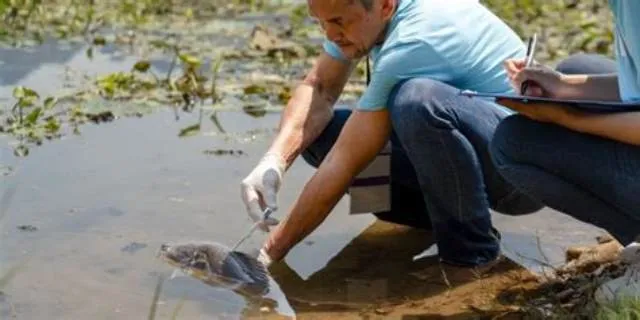
Are you a scientist passionate about protecting our nation's waterways? The U.S. Fish and Wildlife Service (USFWS) is seeking a skilled Fish Biologist to join the Lower Mississippi River Fish and Wildlife Conservation Office in Tupelo, Mississippi. This role offers the unique opportunity to integrate scientific expertise with real-world conservation efforts.
Job Responsibilities
As a Fish Biologist, you will take the lead in:
- Designing and conducting complex biological investigations.
- Sampling fish populations in diverse habitats ranging from large rivers to small streams.
- Developing biological models to quantify habitat needs.
- Reporting scientific findings to both technical and non-technical audiences.
- Managing projects and collaborating with external stakeholders to meet conservation goals.
Requirements
Applicants must be U.S. citizens and meet the specific educational standards set by the Office of Personnel Management (OPM). This includes foundational coursework in aquatic subjects and animal science. Additionally, candidates must demonstrate one year of specialized experience at the GS-09 level.
Comparison: General vs. Specialized Requirements
| Category | Requirement Type | Details |
|---|---|---|
| Education | Basic Requirement | 6 credits in aquatic subjects, 12 in animal sciences |
| Experience | Specialized | 1 year at GS-09 level in data collection/analysis |
| Documentation | Compliance | SF-50s for current feds; transcripts for all |
Salary and Benefits
This position offers a competitive salary range of $74,768 to $97,087 annually, commensurate with experience and grade. Employees enjoy a comprehensive federal benefits package, including health insurance, retirement options, and paid leave.
Application Tips
To maximize your chances of success:
- Adhere to formatting: Your resume must be no more than two pages.
- Be specific: Clearly state your hours worked per week for every position listed.
- Use the Resume Builder: This tool helps ensure all necessary federal formatting standards are met.
If you are ready to apply your biological expertise to meaningful work, this position provides a career path defined by impact and professional growth within the Department of the Interior. Apply today to contribute to the preservation of our aquatic heritage.
Why This Fish Biologist Job Matters
Shape the future of our aquatic ecosystems! Join the U.S. Fish and Wildlife Service as a Fish Biologist and lead critical conservation efforts in the Lower Mississippi River region.
Fish Biologist Job Overview
The U.S. Fish and Wildlife Service is seeking a dedicated Fish Biologist to join the Lower Mississippi River Fish and Wildlife Conservation Office in Tupelo, Mississippi. This role is essential for the effective management, conservation, and restoration of native fish populations and the control of invasive aquatic species. The successful candidate will design complex biological studies, analyze population data, and foster vital partnerships to ensure sustainable aquatic environments.
Requirements for Fish Biologist
- Must be a U.S. Citizen or National.
- Must possess and maintain a valid driver's license.
- Ability to pass a background investigation.
- Males born after December 31, 1959, must be registered for Selective Service.
- Willingness to wear a uniform and comply with standards.
- Completion of a 1-year probationary period.
- Successful E-Verify employment check.
- Must meet specific education requirements in biological/aquatic sciences or a combination of education and experience.
Preferred Qualifications for Fish Biologist
- Ph.D. or equivalent doctoral degree in a field directly related to fishery biology.
- Extensive experience in designing biological studies and utilizing statistical modeling.
- Demonstrated ability to communicate complex scientific data to diverse audiences.
- Proven experience in developing successful inter-agency or stakeholder partnerships.
Federal Benefits & Perks
- ✓Comprehensive health and life insurance options.
- ✓Paid federal holidays and leave programs.
- ✓Retirement savings plans (FERS).
- ✓Uniform allowance.
- ✓Potential for career development and training within the Department of the Interior.
💡 How to Apply Fish Biologist Job & Insider Tips
Application Steps for Fish Biologist Job
- Review the full job announcement and requirements.
- Prepare a 2-page, single-sided resume that includes specific dates, hours worked, and job duties.
- Gather supporting documentation, including transcripts and SF-50s if applicable.
- Complete the online application questionnaire via the USAJOBS portal.
- Submit the complete application package before the closing date.
💡 General Tips
- Ensure your resume clearly lists hours worked per week; failure to do so may result in disqualification.
- Keep your resume strictly to 2 pages with a minimum 10-point font and 0.5-inch margins.
- Submit unofficial transcripts as a backup, but be prepared to provide official copies if selected.
- Clearly describe your 'specialized experience' in alignment with the duties listed in the announcement.
- Double-check your application for completeness before the submission deadline.
Frequently Asked Questions
What is the primary mission of this position?
The primary mission is to support the conservation and management of native fish and aquatic species through rigorous scientific research, habitat assessment, and community partnership development.
Can I submit a longer resume if I have more experience?
No, the resume must not exceed 2 single-sided pages. Documents longer than this will not be accepted.
Is this position eligible for telework?
Yes, the position is telework eligible, subject to agency policy and management approval.
Job from U.S. Fish And Wildlife Service
The Department of the Interior (DOI) and its bureau, the U.S. Fish and Wildlife Service, are dedicated to the stewardship of our nation's natural resources. By working with partners to conserve, protect, and enhance habitats, the FWS ensures the biological health of our aquatic ecosystems for future generations.