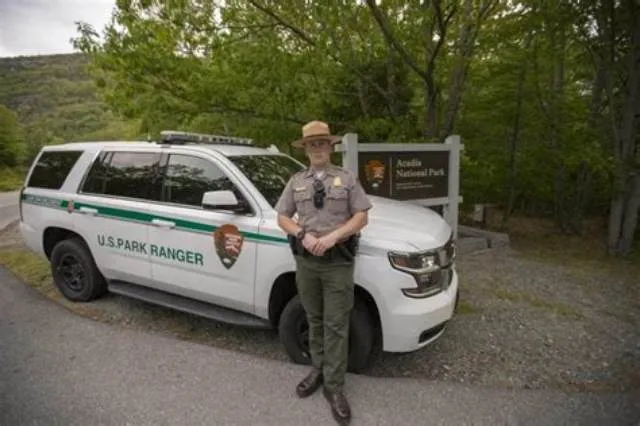
Become a District Ranger: Protecting Olympic National Park
Are you ready to take your law enforcement career to the next level in one of the most stunning wilderness areas in the world? The National Park Service is hiring two Supervisory Park Rangers (Protection) to serve as District Rangers at Olympic National Park.
About the National Park Service
For over a century, the National Park Service (NPS) has protected the natural and cultural heritage of our country. At Olympic National Park, rangers are tasked with protecting diverse ecosystems—from lush rainforests to rugged coastlines—ensuring both visitor safety and resource preservation.
Job Responsibilities
As a District Ranger, you are more than a ranger; you are a leader. Key duties include:
- Leadership: Supervising subordinate law enforcement staff and managing district programs.
- Protection: Detecting and investigating criminal activities, apprehending violators, and ensuring the safety of millions of visitors.
- Emergency Management: Leading technical rescues, swift water operations, and structural firefighting.
Requirements
This position is rigorous and safety-sensitive. Candidates must meet several criteria:
- Legal: Must be 21+, hold a valid driver's license, and pass a drug test.
- Fitness: Must pass the Physical Efficiency Battery (PEB).
- Law Enforcement: Must hold a valid Type I LE Commission.
Comparison: Role Requirements
| Metric | Requirement |
|---|---|
| Age | Minimum 21 |
| Fitness | 25th percentile (PEB) |
| Experience | 1+ Year at GS-9 level |
| Commission | Type I (or equivalent) |
Salary and Benefits
- Salary: $86,257 - $112,140 per year.
- Retirement: Eligible for special 5 U.S.C. 8412(d) FERS retirement coverage.
- Additional: Comprehensive insurance, uniform allowance, and professional growth opportunities.
How to Apply
- Prepare a concise, 2-page resume.
- Submit all required SF-50s and transcripts.
- Complete the online questionnaire by September 23, 2026.
Serving as a District Ranger is a prestigious and vital role within the DOI. If you are qualified, do not miss your chance to protect Olympic National Park.
Why This Supervisory Park Ranger (Protection) - District Ranger Job Matters
Protect the legacy of the Pacific Northwest as a District Ranger at Olympic National Park—where high-stakes law enforcement meets the raw beauty of the wilderness.
Supervisory Park Ranger (Protection) - District Ranger Job Overview
The National Park Service is seeking a dedicated Supervisory Park Ranger (Protection) to serve as a District Ranger. In this role, you will be the primary authority for visitor and resource protection within Olympic National Park. You will lead field operations, supervise law enforcement staff, and manage complex emergency responses in some of the most rugged and breathtaking landscapes in the United States. This is a critical leadership position for those passionate about public safety, natural resource conservation, and the stewardship of our nation's most iconic wild spaces.
Requirements for Supervisory Park Ranger (Protection) - District Ranger
- Must be a U.S. Citizen.
- Must be at least 21 years of age.
- Must possess or have held a valid NPS Type I Law Enforcement Commission within the last three years.
- Must maintain a valid driver's license.
- Must hold a current Emergency Medical Technician-Basic certification or higher.
- Must pass a physical examination and the Physical Efficiency Battery (PEB).
- Must undergo a background investigation and drug testing.
- Must not have any domestic violence convictions.
Preferred Qualifications for Supervisory Park Ranger (Protection) - District Ranger
- Graduate-level education in natural resource management, criminal justice, or public administration.
- Substantial field experience in primary law enforcement, investigation, and apprehension.
- Demonstrated experience in technical rescue operations, including swift water and helicopter rescue.
- Proven leadership experience in managing field programs and law enforcement staff.
Federal Benefits & Perks
- ✓Special retirement provisions under 5 U.S.C. 8412(d) (FERS).
- ✓Competitive federal salary and step increases.
- ✓Comprehensive federal health insurance and life insurance.
- ✓Uniform allowance.
- ✓Paid time off and leave accrual based on experience.
- ✓Access to government travel and purchase cards for operational duties.
💡 How to Apply Supervisory Park Ranger (Protection) - District Ranger Job & Insider Tips
Application Steps for Supervisory Park Ranger (Protection) - District Ranger Job
- Prepare a resume that does not exceed 2 pages, specifically detailing hours worked per week and tenure at each grade.
- Collect necessary supporting documents: SF-50 forms, transcripts, performance appraisals, and awards from the last 5 years.
- Complete the online application and assessment questionnaire through the official portal.
- Ensure all documentation is submitted before the closing date of September 23, 2026.
- Verify application status through your online profile.
💡 General Tips
- Strictly follow the 2-page resume limit; extra pages will be discarded.
- Include specific hours worked per week to ensure your specialized experience is accurately credited.
- Explain any missing performance appraisals in your application if you do not have one from the last 18 months.
- Focus your resume on the specific competencies requested: Criminal Law, Leadership, Public Safety, and Resource Protection.
- Check your online status frequently, as the agency will not provide manual status updates via email.
Frequently Asked Questions
What is the Physical Efficiency Battery (PEB)?
The PEB is a fitness standard that measures agility, upper body strength, and cardio-respiratory endurance, including a 1.5-mile run and sit-and-reach flexibility test.
Is this a remote or telework-eligible position?
No. This position requires on-site presence in the park district for law enforcement and emergency management duties.
What if I have foreign education?
You must provide an official evaluation from a private organization specializing in interpreting foreign credentials to prove equivalency to U.S. standards.