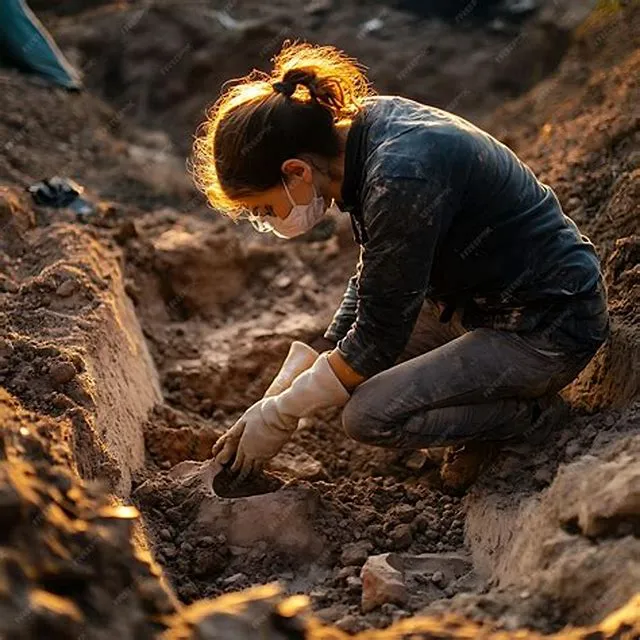
Embark on a Historic Career: US Forest Service Archeologist Opportunities (GS-09/GS-11)
Our national forests and grasslands hold thousands of years of human history, from ancient Native American settlements to pioneering settlements. Preserving this rich historical tapestry requires dedicated scientific experts who can balance physical resource management with academic discovery. The Department of Agriculture's Forest Service is now seeking passionate, skilled, and professional Archeologists for GS-09 and GS-11 positions across multiple locations nationwide.
This is more than a research job; it is an active stewardship role. As an Archeologist with the Forest Service, you will act as a primary guardian of our public heritage, assessing historical resources and protecting them during critical land management projects. This guide outlines everything you need to know about the position, including qualifications, duty stations, salaries, and tips on securing a federal job.
About the Agency: The US Forest Service
The United States Forest Service is charged with managing and caring for more than 193 million acres of public lands. From expansive pine forests to arid grasslands, the agency preserves scenic landscapes while maintaining sustainable uses like logging, grazing, recreation, and wildlife conservation.
Federal archeology is essential to this mission. The agency ensures that vital natural resource projects do not harm invaluable cultural and historical resources. Working for the Forest Service means joining a collaborative team of scientists, foresters, and environmental specialists who value public service, scientific integrity, and outdoor preservation.
Job Responsibilities
As an Archeologist (GS-0193 series), your daily duties will involve a mix of outdoor fieldwork and structured laboratory or office analysis. While tasks will scale with your experience and grade level, primary responsibilities include:
- Planning and Conducting Field Surveys: Designing and executing comprehensive archaeological surveys to locate, map, and document cultural resources and historic sites.
- Mitigation and Protection: Assessing proposed projects—such as road constructions, reservoir developments, or recreational trail installations—to evaluate potential impacts on archaeological sites and recommend protective actions.
- Scientific Reporting: Drafting high-quality archaeological reports, mapping site boundaries, and updating geographic databases with accurate inventory records.
- Project Management: Coordinating cultural and heritage resource project plans, developing contract specifications, and managing project budgets.
- Public Engagement: Translating scientific findings into educational materials, exhibitions, or professional publications, and interacting with the public to convey the value of cultural resource conservation.
- Crew Supervision: Directing the day-to-day fieldwork of survey teams and laboratory technicians (up to 20% of your operational hours).
Requirements & Qualifications
Applying for professional scientific positions in the federal government requires meeting strict Office of Personnel Management (OPM) guidelines. To qualify, you must meet the following basic requirements:
1. Basic Educational Requirement
You must hold a bachelor's or higher degree from an accredited institution. Your coursework must include:
- A major in archeology, anthropology, history, or a closely related discipline, with a curriculum containing similar coursework.
- At least 3 semester hours in each of the following fields: History of Archeology, Archeology of a Major Geographical Area (e.g., North America), Regional Archeology, and Theory & Methods of Archeology.
- An approved archeological field school providing hands-on training in excavation, mapping, and laboratory analysis.
- Six semester hours of related coursework in areas such as geography, geology, scientific writing, historic preservation, or surveying.
2. Alternative Qualification Routes
If you do not have a dedicated archaeology or anthropology degree, you may qualify through:
- A Combination of Education and Experience: Academic coursework equivalent to the requirements above, supplemented by appropriate technical field experience or higher education.
- Professional Experience: Four years of professional archaeological work demonstrating standard principles, theories, and field methodologies (including survey, excavation, and report writing), coupled with evidence of crew leadership capabilities.
3. Specialized Experience & Grade Levels
In addition to the basic requirements, candidates must possess specialized experience or advanced graduate education for specific GS levels:
- GS-09 Level: One year of specialized experience equivalent to at least the GS-07 level (e.g., assisting with archaeological surveys, compiling historic records, and helping write technical reports). Alternatively, you may qualify with a master's degree or 2 full years of progressively higher-level graduate education directly related to archaeology.
- GS-11 Level: One year of specialized experience equivalent to at least the GS-09 level (e.g., conducting standard archaeological project segments independently, managing database tracking, assessing site damage, or leading survey crews). Alternatively, a Ph.D. or 3 years of progressively higher graduate study leading to a Ph.D. is qualifying.
Duty Stations and Promotion Potential
The Forest Service is filling positions in numerous scenic communities across the country. Promotion potentials differ depending on the location of selection. The following table provides a comprehensive overview of the duty locations and their associated grade-level promotion potentials:
| Duty Station | State | Promotion Potential | Regional Contact Email |
|---|---|---|---|
| Watford City, Dickinson | ND | GS-09 | [email protected] |
| Canon City | CO | GS-11 | [email protected] |
| Mena | AR | GS-11 | [email protected] |
| Boise, Burley, Jerome | ID | GS-11 | [email protected] |
| Richfield, Cedar City, Escalante, Panguitch | UT | GS-11 | [email protected] |
| Milam | TX | GS-11 | [email protected] |
| Crescent, Westfir, Baker City | OR | GS-11 | [email protected] |
| Camino, Dunlap, Prather, Gasquet | CA | GS-11 | [email protected] |
| Mio | MI | GS-11 | [email protected] |
| Mountainair, Lytle Creek | NM / CA | GS-11 | [email protected] |
Salary & Benefits Overview
The base salary for this position ranges from $61,722 to $97,087 per year. This scale is based on the standard federal "Rest of the U.S." General Schedule. However, your final compensation will be determined based on the local cost-of-living adjustments of your specific geographic duty station.
As a federal employee, you will receive a comprehensive benefits package:
- Retirement Planning: Full enrollment in the Federal Employees Retirement System (FERS) pension, paired with a Thrift Savings Plan (TSP) with 5% agency matching.
- Time Off: Accrual of paid annual leave, sick leave, and 11 paid federal holidays.
- Healthcare: Excellent selections of federally subsidized medical, vision, dental, and life insurance programs.
- Additional Perks: Select sites may offer access to federal daycare facilities or agency-subsidized employee housing.
Application Tips
Navigating the federal hiring process requires attention to detail. Keep these critical strategies in mind:
- The Strict Two-Page Resume Rule: Unlike general federal applications, this Forest Service listing strictly enforces a two-page maximum for resumes. Resumes exceeding this limit will be automatically disqualified. Focus your resume on highly relevant experience, archaeology coursework, and field school details, ensuring it is concise and impact-driven.
- Be Explicit About Dates and Hours: For each job entry on your resume, clearly list the start and end dates (month and year) and the hours worked per week. This information is mandatory for the HR specialist to calculate your qualifying specialized experience.
- Include Your Transcripts: Because these positions have strict academic coursework requirements, you must attach a copy of your unofficial transcripts. Ensure your transcript clearly shows the completed courses in history of archeology, regional archeology, and archeological field school.
- Do Not Inflate Your Assessment Answers: While it is tempting to rate yourself as an expert on the Assessment Questionnaire, your resume must clearly provide evidence for every answer you select. If a rating panel determines that your experience does not match your self-assessment, your score will be lowered or your application will be marked ineligible.
Frequently Asked Questions (FAQ)
Q: Who is eligible to apply for these positions? A: Under the USDA Demonstration Project authority, these openings are open to all United States citizens and nationals.
Q: What documents are required for my application package to be complete? A: At minimum, you must submit a resume (under two pages) and copies of your college transcripts. If applicable, you must also upload veteran's preference documentation (DD-214, SF-15) or CTAP/ICTAP separation notices.
Q: Is there a travel requirement for these jobs? A: Yes. These positions require travel to remote project areas, forests, and archeological sites. Occasional travel for professional training or regional coordination meetings may also be required.
Q: Can I apply for multiple locations on a single application? A: Yes, you can select multiple desired duty locations when completing the online assessment questionnaire on USA Staffing.
An Archeologist position with the US Forest Service is a rare and fulfilling path that lets you spend your career actively preserving history in some of the nation's most stunning natural environments. By combining scientific investigation with public service, you can play a definitive role in writing the story of our nation's past. Prepare your transcripts, craft a targeted two-page resume, and submit your application to start your journey in cultural stewardship today!
Why This Archeologist Job Matters
Protect our nation's cultural heritage and lead vital scientific discoveries across millions of acres of magnificent public lands.
Archeologist Job Overview
The Department of Agriculture's Forest Service is seeking dedicated and qualified Archeologists (GS-0193-09/11) to join their team across multiple regions in the United States. In this role, you will plan and execute archeological surveys, review environmental impacts on historic sites, manage cultural conservation programs, and share valuable historical narratives with the public. With a salary range of $61,722 to $97,087, this position offers an exceptional opportunity to build a rewarding federal career in cultural resource management.
Requirements for Archeologist
- Must be a citizen or national of the United States.
- Males born after December 31, 1959, must be registered for Selective Service or hold a valid exemption.
- Must successfully complete a background investigation and/or fingerprint check.
- Must participate in direct deposit for all federal disbursements.
- Must pass the E-Verify employment verification check.
- Must complete a mandatory 1-year probationary period upon appointment.
Preferred Qualifications for Archeologist
- Possession of a Master's or Ph.D. degree in Archeology, Anthropology, or a closely related discipline.
- Strong record of leading archaeological surveys, preparing complex technical reports, and directing excavation programs.
- Proven experience collaborating with regional stakeholders, Native American tribes, or state historic preservation offices.
- Deep familiarity with GIS/GPS applications and cultural resource database management.
Federal Benefits & Perks
- ✓Competitive base salary with locality pay adjustments based on your final duty station.
- ✓Comprehensive health, dental, and vision insurance packages.
- ✓Thrift Savings Plan (TSP) with up to 5% agency matching contributions.
- ✓Generous annual leave, sick leave, and paid federal holidays.
- ✓Robust retirement benefits under the Federal Employees Retirement System (FERS).
- ✓Potential access to agency-provided housing or childcare facilities at select locations.
- ✓Flexible spending accounts for medical and dependent care.
💡 How to Apply Archeologist Job & Insider Tips
Application Steps for Archeologist Job
- Read the full job announcement carefully to determine your eligibility and preferred grade level (GS-09 vs. GS-11).
- Format your resume to highlight your educational background, specialized coursework, field school details, and professional experience, ensuring it is strictly 2 pages or less.
- Gather your unofficial college transcripts and other supporting documents, such as DD-214 for veterans or CTAP/ICTAP proof.
- Click the 'Apply' button on the job portal to navigate to the online USDA Staffing platform.
- Complete the Assessment Questionnaire thoroughly, ensuring your responses are fully substantiated in your resume.
- Upload and verify all documents before submitting your finalized application package prior to 11:59 p.m. Eastern Time on the closing date.
💡 General Tips
- Keep your resume strictly under the two-page limit. USAJobs screening will immediately disqualify applications with resumes exceeding two pages.
- Verify that your transcripts are clear, legible, and demonstrate successful completion of the required 3 semester hours in essential archeology subjects.
- Tailor your resume description to reflect the specific GS-09 or GS-11 specialized experience definitions, emphasizing accomplishments in field surveys, report writing, or artifact analysis.
- Double-check that any uploaded files are in acceptable formats (such as PDF or Word) and are completely unencrypted.
Frequently Asked Questions
What is the maximum page limit for resumes on this application?
Resumes must not exceed two pages. Applicants who submit resumes longer than two pages will be automatically removed from consideration.
Are there basic educational requirements for this position?
Yes. Applicants must possess a bachelor's degree in archeology, anthropology, or a related discipline with specialized coursework including archeological field school, or have an equivalent combination of education and experience.
Is the advertised salary scale uniform across all locations?
No. The salary range ($61,722 - $97,087) is based on the 'Rest of the U.S.' pay scale. Your final salary will be determined at the time of your selection, adjusted for the cost-of-living locality of your specific duty station.
Is telework an option for these positions?
No. Due to the highly active, hands-on, and field-based nature of these archaeological assignments, telework is not available.
External Resources
- ↗ USAJobs Archeologist Listing
- ↗ OPM General Schedule Qualification Standards
- ↗ USA Staffing Online Application Link
- ↗ USA Staffing Application Status Portal
- ↗ Assessment Questionnaire Details
- ↗ Region 1 Contact (Aidan Mccarty)
- ↗ Region 2 Contact (Destiny Chapman)
- ↗ Region 3 Contact (Arlene Perea)
- ↗ Boise National Forest Contact (Virginia Clifton)
- ↗ Fishlake National Forest Contact (Marcel Corbeil)
- ↗ Dixie National Forest Contact (Sara Stauffer)
- ↗ Sawtooth National Forest Contact (Bernadette Barthelenghi)
- ↗ San Bernardino National Forest Contact (Michael Nobles)
- ↗ Sequoia National Forest Contact (Kyle Lane)
- ↗ Sierra National Forest Contact (Kim Sorini)
- ↗ Six Rivers National Forest Contact (Kathy Allen)
- ↗ Deschutes National Forest Contact (Anastasia Lugomendez)
- ↗ Willamette National Forest Contact (Mariah Wallace)
- ↗ Wallowa-Whitman National Forest Contact (Jeremy Aujero)
- ↗ Ouachita National Forest Contact (Timothy Oosterhouse)
- ↗ National Forests In Texas Contact (Edwin Davis)
- ↗ Fair Chance Act Inquiry Email
- ↗ Agency General HR Contact Center