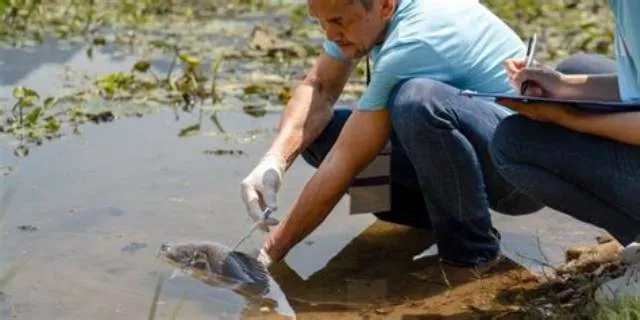
A Career in Conservation: Becoming a Fish Biologist at Quilcene National Fish Hatchery
Are you looking for a career that combines scientific research with hands-on conservation? The U.S. Fish and Wildlife Service (USFWS) is currently accepting applications for a Fish Biologist at the Quilcene National Fish Hatchery in Washington. This is more than just a job; it is a vital role in protecting and enhancing aquatic species for the American people.
Job Responsibilities
As a Fish Biologist, your duties will be diverse and challenging. You will:
- Manage daily fish culture activities, including spawning, incubation, and feeding.
- Conduct health assessments and microscopic disease checks on aquatic life.
- Maintain complex facility infrastructure, including water supply and monitoring systems.
- Develop technical reports and manage hatchery operational data.
- Act as a public representative through educational outreach and facility tours.
- Participate in an on-call alarm rotation to ensure the safety of the livestock.
Requirements
Candidates must be U.S. Citizens and satisfy several federal requirements:
- A degree in biological science with at least 6 semester hours in aquatic subjects and 12 in animal sciences.
- One year of specialized experience at the GS-07 grade level.
- Must possess and maintain a valid driver's license.
- Ability to handle the physical demands, such as lifting up to 50 pounds and working in outdoor environments.
Comparison of Qualifications
| Requirement | Description |
|---|---|
| Education | Major in biological science with aquatic/animal science focus |
| Experience | 1 year of specialized experience at GS-07 equivalent |
| Physicality | Ability to work in varied outdoor environments & lift 50lbs |
| Assessment | Must pass the USA Hire Competency Based Assessment |
Salary Overview
The position offers a competitive salary range of $69,373 to $90,190 per year, commensurate with federal GS-09 pay scales. Additionally, employees receive a comprehensive benefits package including health insurance, retirement options, and potential for relocation incentives.
This role offers a unique opportunity to live and work in the stunning Pacific Northwest while directly influencing salmon recovery efforts. If you are prepared for the challenge and responsibility of hatchery management, we encourage you to submit your application before the September 15th deadline.
Why This Fish Biologist Job Matters
Join the legacy of the Quilcene National Fish Hatchery—a pivotal role in tribal trust and Pacific Northwest conservation.
Fish Biologist Job Overview
The U.S. Fish and Wildlife Service is seeking a dedicated Fish Biologist for the historic Quilcene National Fish Hatchery. Since 1911, this facility has played a critical role in raising Coho Salmon to support tribal treaty obligations and local fisheries. As a Fish Biologist, you will manage vital hatchery operations, maintain aquatic systems, and directly contribute to the conservation of salmon populations in the beautiful Olympic Peninsula of Washington.
Requirements for Fish Biologist
- U.S. Citizenship or National status
- Registration with Selective Service (for males born after 12-31-59)
- Possession of a valid driver's license
- Must pass an E-Verify employment check
- Successful background investigation
- Ability to reside in government-provided housing
- Ability to participate in a mandatory rotating after-hours alarm response program
- Successful completion of the USA Hire assessment
Preferred Qualifications for Fish Biologist
- Degree in biological science with at least 6 semester hours in aquatic subjects and 12 semester hours in animal sciences
- One year of specialized experience at the GS-07 level
- Graduate-level education (Master's degree or equivalent) in fisheries or aquatic sciences
- Experience with cold-water fish husbandry and disease control
- Proven capability in maintaining complex hatchery infrastructure and water quality systems
Federal Benefits & Perks
- ✓Competitive federal salary
- ✓Comprehensive health and life insurance options
- ✓Federal retirement savings plan (TSP)
- ✓Paid holidays and leave accrual
- ✓Uniform allowance provided
- ✓Potential for recruitment or relocation incentives
💡 How to Apply Fish Biologist Job & Insider Tips
Application Steps for Fish Biologist Job
- Review the full job announcement carefully on USAJobs
- Prepare a resume not exceeding two pages, adhering to specific formatting requirements
- Gather official or unofficial transcripts and recent performance appraisals
- Apply online via the USAStaffing portal
- Complete the required USA Hire assessment upon notification
- Monitor application status through your USAJobs account
💡 General Tips
- Ensure your resume strictly follows the 2-page limit and font requirements to avoid disqualification.
- Be specific in your resume about dates of employment and hours worked per week to verify your experience.
- If your performance appraisal is missing, include a signed statement explaining why.
- Test your ability to respond to alarm incidents within 15 minutes, as this is a core requirement of the role.
- Use the USA Hire practice resources provided in the job description to prepare for the assessment.
Frequently Asked Questions
Is government housing provided?
Yes, occupancy of government quarters is required for this position.
Are there on-call requirements?
Yes, you must participate in a weekly rotating after-hours alarm response program and be able to arrive at the station within 15 minutes of an alarm.
What is the education requirement for this position?
You need a degree in biological science with specific credit hours in aquatic and animal sciences, or a combination of equivalent education and experience.
Job from U.S. Fish And Wildlife Service
The Department of the Interior and the U.S. Fish and Wildlife Service are dedicated to the stewardship of our nation's natural resources. The Quilcene National Fish Hatchery, located on the picturesque Olympic Peninsula, has served the community since 1911. By working here, you contribute to crucial Tribal Trust needs, helping to manage Coho Salmon populations that sustain local ecosystems and cultures.