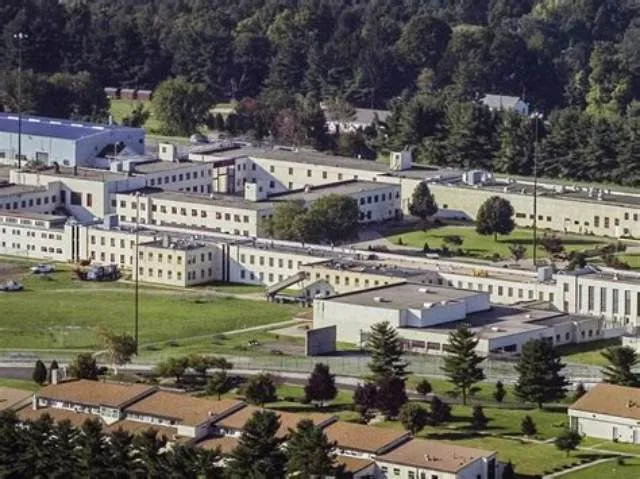
Become a Correctional Treatment Specialist with the Bureau of Prisons
Are you a dedicated professional in the social or behavioral sciences looking to transition into a role that combines clinical skill with public safety? The Bureau of Prisons (BOP) is seeking a motivated Correctional Treatment Specialist to serve as a Special Population Program Coordinator in Florence, Colorado. This position offers a unique chance to influence the lives of inmates through evidence-based programming while ensuring the security of the federal correctional system.
Job Responsibilities
As a Special Population Program Coordinator, you will:
- Facilitate clinical psychological services tailored to specific inmate needs.
- Design and lead group sessions focused on trauma-informed care and individual growth.
- Coordinate reentry planning, including housing placement and community treatment services.
- Maintain the highest standards of institutional security and safety.
Requirements
To qualify for this GS-11 position, applicants must meet specific educational and professional benchmarks:
| Requirement | Description |
|---|---|
| Citizenship | Must be a U.S. Citizen. |
| Education | Bachelor's degree with 24+ semester hours in social/behavioral sciences. |
| Experience | One year of specialized experience at the GS-09 level. |
| Age | Maximum entry age of 36 applies for new law enforcement appointments. |
| Screening | Must pass background, drug, and physical assessments. |
Salary Overview
This position is classified under the General Schedule (GS) system with a salary range of $76,650 to $99,650 per year.
Benefits
Employees of the Bureau of Prisons enjoy a robust federal benefits package, including:
- Health, dental, and vision insurance options.
- The Federal Employees Retirement System (FERS).
- A generous leave policy (vacation and sick time).
- Consistent professional development and training opportunities.
Application Tips
- Respect the Limits: Your resume must be no longer than two pages; applications exceeding this will be rejected.
- Documentation Matters: Use clear labels for files like 'Transcripts' or 'DD-214'. Avoid special characters in filenames.
- Assessments: Be prepared to complete the USA Hire assessments if prompted; ensure you have a stable internet connection and sufficient time set aside.
Serving as a Correctional Treatment Specialist is more than just a job; it is a commitment to public safety and rehabilitation. If you meet the criteria and are ready to take the next step in your federal career, review the full announcement and submit your application today.
Why This Correctional Treatment Specialist (Special Population Program Coordinator) Job Matters
Make a meaningful impact on lives while ensuring public safety as a Correctional Treatment Specialist in Colorado.
Correctional Treatment Specialist (Special Population Program Coordinator) Job Overview
Join the Bureau of Prisons as a Correctional Treatment Specialist (Special Population Program Coordinator) in Florence, Colorado. This role is dedicated to providing specialized clinical care and reentry planning for specific inmate populations, contributing directly to institutional security and long-term public safety.
Requirements for Correctional Treatment Specialist (Special Population Program Coordinator)
- U.S. Citizenship
- Bachelor's degree with at least 24 semester hours in behavioral or social sciences
- One year of specialized experience equivalent to the GS-09 level
- Completion of a three-week training course in Glynco, Georgia
- Satisfactory background, credit, and medical/urinalysis screenings
- Must meet maximum entry age requirements of 36 for original federal law enforcement appointments
Preferred Qualifications for Correctional Treatment Specialist (Special Population Program Coordinator)
- Three years of progressively higher-level graduate education leading to a Ph.D.
- Experience in trauma-informed process facilitation
- Demonstrated ability in group session design and conflict resolution within clinical settings
Federal Benefits & Perks
- ✓Competitive Federal Salary
- ✓Federal Employee Health Benefits
- ✓Retirement Plans
- ✓Paid Time Off
- ✓Opportunities for Professional Development
💡 How to Apply Correctional Treatment Specialist (Special Population Program Coordinator) Job & Insider Tips
Application Steps for Correctional Treatment Specialist (Special Population Program Coordinator) Job
- Review the full vacancy announcement thoroughly.
- Prepare a resume limited to two pages.
- Create or update your USAJOBS profile.
- Upload required documentation, including transcripts and SF-50s if applicable.
- Complete the online application and assessment questionnaire.
- Monitor email for USA Hire assessment instructions and status updates.
💡 General Tips
- Strictly adhere to the two-page resume limit to avoid disqualification.
- Ensure all transcripts include your name and the institution's name.
- Be precise with work hours per week and employment dates (MM/YYYY).
- Use standard fonts like Arial or Lato and maintain 0.5-inch margins.
- Review all required documents early to avoid issues before the closing date.
Frequently Asked Questions
What is the maximum entry age for this position?
The maximum entry age is 36 years old for original appointments to Bureau of Prisons institutions, though exceptions may apply for qualified veterans.
Is travel required?
This position has limited travel requirements; specific duties focus on on-site institutional programming.
What if I am a veteran?
Qualified preference-eligible veterans are encouraged to apply and may be exempt from the maximum age requirement. Ensure you provide your DD-214.
Can I edit my application later?
You can return to the USAJOBS portal to edit your application or supporting documents at any time before the closing date of August 24, 2026.
Job from Bureau Of Prisons/Federal Prison System
The Federal Bureau of Prisons is an agency within the U.S. Department of Justice tasked with managing the federal prison system. Our mission is to protect society by confining offenders in the controlled environments of prisons and community-based facilities that are safe, humane, and cost-efficient, while providing work and other self-improvement opportunities to assist offenders in becoming law-abiding citizens.