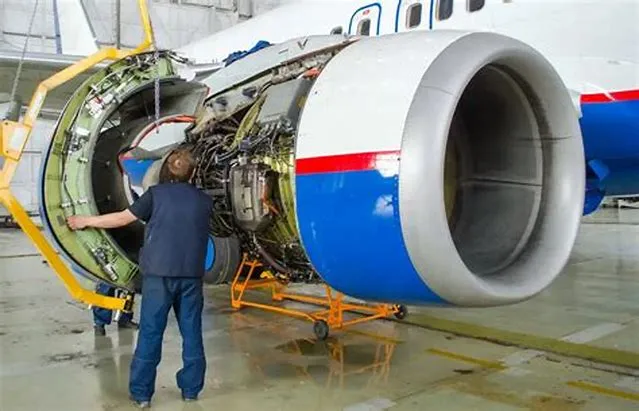
Advance Aviation Safety as a Propulsion Aerospace Engineer at the NTSB
The National Transportation Safety Board (NTSB) stands at the forefront of transportation safety, tasked with the critical mission of determining the probable cause of aviation accidents and advocating for safety improvements. If you are an experienced aerospace engineer with a deep understanding of propulsion systems, the NTSB is looking for a leader to join its Office of Aviation Safety. This GS-14 position offers a unique opportunity to apply your technical skills in a high-stakes environment where every analysis helps protect the flying public.
Job Responsibilities
As a Propulsion Aerospace Engineer, your daily work will be varied and intense. Key duties include:
- Accident Investigation: Serving as the Propulsion Group Chairperson during on-site investigations.
- Technical Analysis: Examining turbine and reciprocating engines, propellers, fuel systems, and auxiliary power units.
- Reporting: Creating comprehensive, factual reports that detail the evidence gathered during testing and examinations.
- Leadership: Developing test plans and leading investigative teams during high-pressure scenarios.
- Recommendations: Synthesizing technical findings into formal safety recommendations to correct hazardous conditions.
Comparison of Investigative Roles
| Feature | Propulsion Engineer | General Aviation Inspector |
|---|---|---|
| Focus | Mechanical/Engine Systems | Regulatory Compliance |
| Site Work | High (Wreckage examination) | Medium (Facility audits) |
| Primary Output | Failure Analysis Reports | Inspection Findings |
Requirements
To be considered for this role, you must demonstrate the following:
- Professional Education: A bachelor's degree in engineering from an ABET-accredited school, or equivalent professional coursework in physics and mathematics.
- Specialized Experience: At least one year of federal service experience at the GS-13 level related to propulsion systems.
- Adaptability: The ability to work in remote or hazardous environments, often requiring the use of protective gear like hardhats and safety equipment.
Salary Overview
This position is classified under the General Schedule (GS) at the grade 14 level. The current annual salary range for this role is $143,913 to $187,093. This compensation reflects the high level of technical expertise and the critical nature of the investigative work performed by the NTSB.
Benefits
Employees of the NTSB enjoy a comprehensive federal benefits package, including:
- Health and Wellness: Competitive health, dental, and vision insurance.
- Work-Life Balance: Telework opportunities, flexible work schedules, and generous annual/sick leave.
- Retirement: Federal Employees Retirement System (FERS) and the Thrift Savings Plan (TSP).
- Other Perks: Transit subsidies and access to federal fitness facilities.
Application Tips
To stand out, ensure your resume is clear and concise. Use specific examples that demonstrate your understanding of propulsion systems and your experience in conducting investigations. Always attach your transcripts and any required certifications to your application package by the closing date of July 14, 2026.
This role is for engineers who want their work to have a tangible, life-saving impact. If you possess the technical rigor and investigative focus needed for this position, we encourage you to review the official job announcement and submit your application today.
Why This Aerospace Engineer (Propulsion) - Direct Hire Job Matters
Take command of critical aviation safety investigations at the NTSB. Your expertise in propulsion engineering will help prevent future accidents and shape the future of transportation safety.
Aerospace Engineer (Propulsion) - Direct Hire Job Overview
The National Transportation Safety Board (NTSB) is seeking a highly skilled Aerospace Engineer specializing in propulsion to serve in its Office of Aviation Safety. This is a high-impact, mission-critical role based in Washington, D.C., where you will lead technical investigations into turbine and reciprocating engines, propellers, and fuel systems following aviation accidents. You will act as the Propulsion Group Chairperson, analyzing complex mechanical evidence, conducting rigorous safety research, and developing recommendations that directly influence national and international aviation policy.
Requirements for Aerospace Engineer (Propulsion) - Direct Hire
- U.S. Citizenship is required.
- One year of specialized experience equivalent to the GS-13 grade level in the federal service.
- Bachelor's degree in professional engineering from an ABET-accredited program or a combination of education and experience.
- Demonstrated experience in collecting and analyzing propulsion-related research (turbine/reciprocating engines, propellers, fuel systems, etc.).
- Must be able to pass a background investigation (High-Risk position).
- Must be capable of working in challenging environments, including remote or hazardous accident sites.
Preferred Qualifications for Aerospace Engineer (Propulsion) - Direct Hire
- Professional Engineer (PE) licensure.
- Proven experience leading technical investigative groups.
- Ability to synthesize complex engineering data into high-level safety recommendations for industry stakeholders.
- Prior experience collaborating with multi-disciplinary federal, international, and industry teams.
Federal Benefits & Perks
- ✓Comprehensive federal health, vision, and dental insurance programs.
- ✓Federal Employees Retirement System (FERS) and Thrift Savings Plan (TSP).
- ✓Generous annual and sick leave accrual.
- ✓Flexible work schedules and telework options.
- ✓Transit and fitness facility benefits.
- ✓Paid federal holidays.
💡 How to Apply Aerospace Engineer (Propulsion) - Direct Hire Job & Insider Tips
Application Steps for Aerospace Engineer (Propulsion) - Direct Hire Job
- Create or update your USAJOBS profile.
- Prepare a detailed, two-page resume highlighting your propulsion engineering experience and accomplishments.
- Gather supporting documentation including college transcripts (official or unofficial).
- Complete the online application questionnaire via the NTSB portal.
- Submit your full application package before the closing date.
- Complete the required USA Hire Assessments if prompted via email.
💡 General Tips
- Be specific in your resume; do not assume the recruiter knows your technical background.
- Ensure your resume includes employer names, dates of employment (Mo/Yr), and hours worked per week.
- Submit all required documents in the initial application to avoid an 'ineligible' rating.
- Review your application carefully; once the announcement closes, you cannot modify your submission.
- Use the practice resources available on the USA Hire portal before taking your assessments.
Frequently Asked Questions
What is the primary role of a Propulsion Aerospace Engineer at the NTSB?
You will act as the Propulsion Group Chairperson, investigating the mechanical failure of engine components, propellers, and fuel systems, and writing fact-based reports to inform safety recommendations.
Is travel required for this position?
Yes. The role requires immediate travel to crash sites as part of the 'go-team,' as well as potential international travel for significant investigations.
What happens after I apply?
Your application and supporting documents will be screened for minimum qualifications. If you qualify, you may be invited to interview, and your status will be updated in your USAJOBS account.
What is the 'go-team' concept?
The NTSB go-team is a rapid-response unit that deploys to accident sites within hours of an incident to document evidence and secure the wreckage for analysis.
Is a security clearance required?
While not a 'clearance' in the traditional sense, this position is designated as High Risk, meaning it requires a thorough background and suitability check.
Job from National Transportation Safety Board
The NTSB is an independent federal agency dedicated to investigating civil aviation accidents and significant incidents across all modes of transportation. By providing objective, fact-based reports and actionable recommendations, the agency serves as a global authority on safety. Working here means collaborating with elite technical experts and playing a direct role in preventing future tragedies.
External Resources
- ↗ USAJobs Application Portal
- ↗ Aerospace Engineering Series 0861 (OPM)
- ↗ NTSB Application System
- ↗ Application Status
- ↗ Accreditation Information
- ↗ U.S. Dept of Education
- ↗ Foreign Education Recognition
- ↗ Direct-Hire Authority Info
- ↗ Application Questionnaire Preview
- ↗ USA Hire Resource Center
- ↗ Application Status Help
- ↗ Resume Writing Tips Video
- ↗ Career Transition Assistance
- ↗ Pandemic Benefits Info
- ↗ Qualification Standards Handbook
- ↗ E-Verify Information
- ↗ Reasonable Accommodation Information
- ↗ Recruitment Email